
 Image 1 of 2
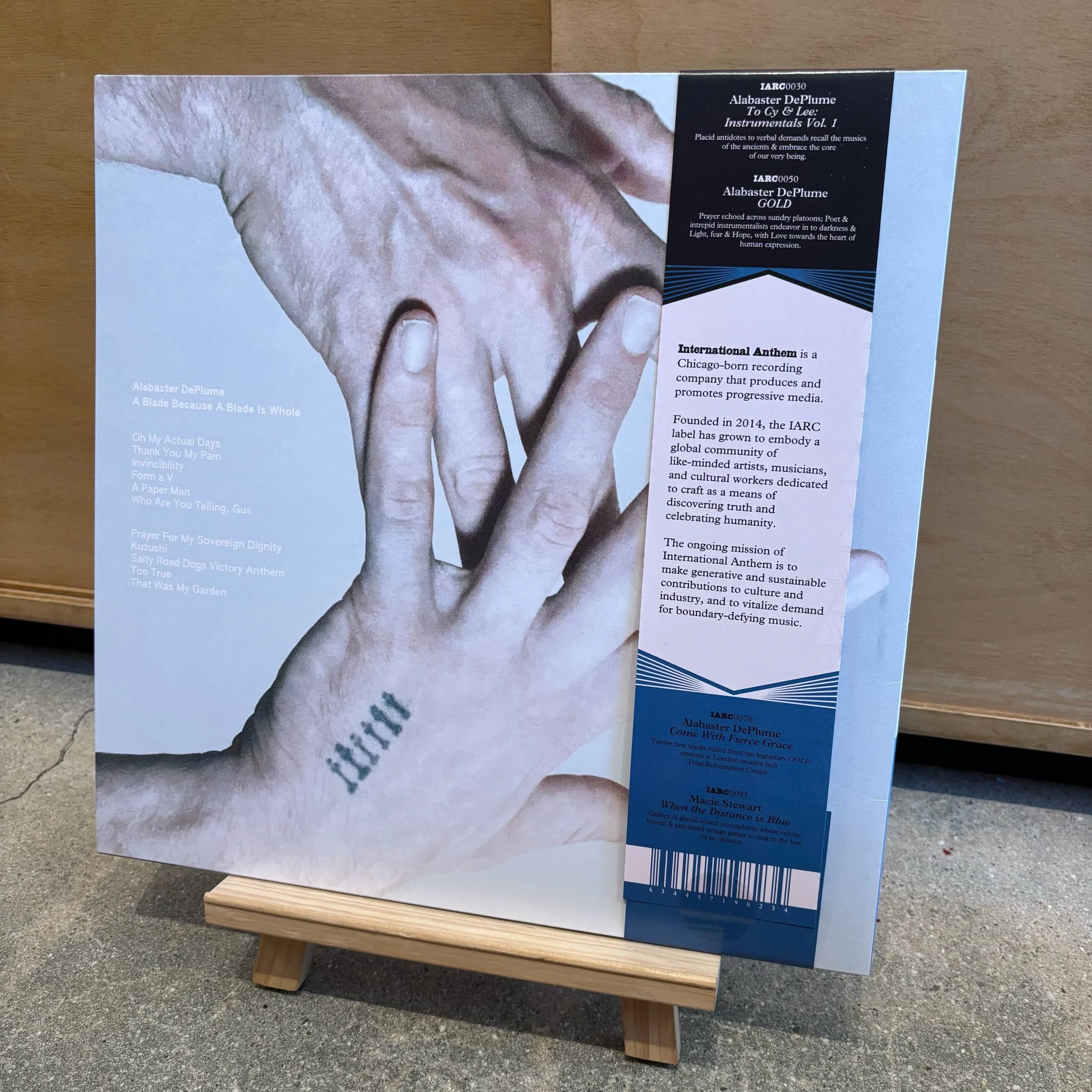 Image 2 of 2
International Anthem release
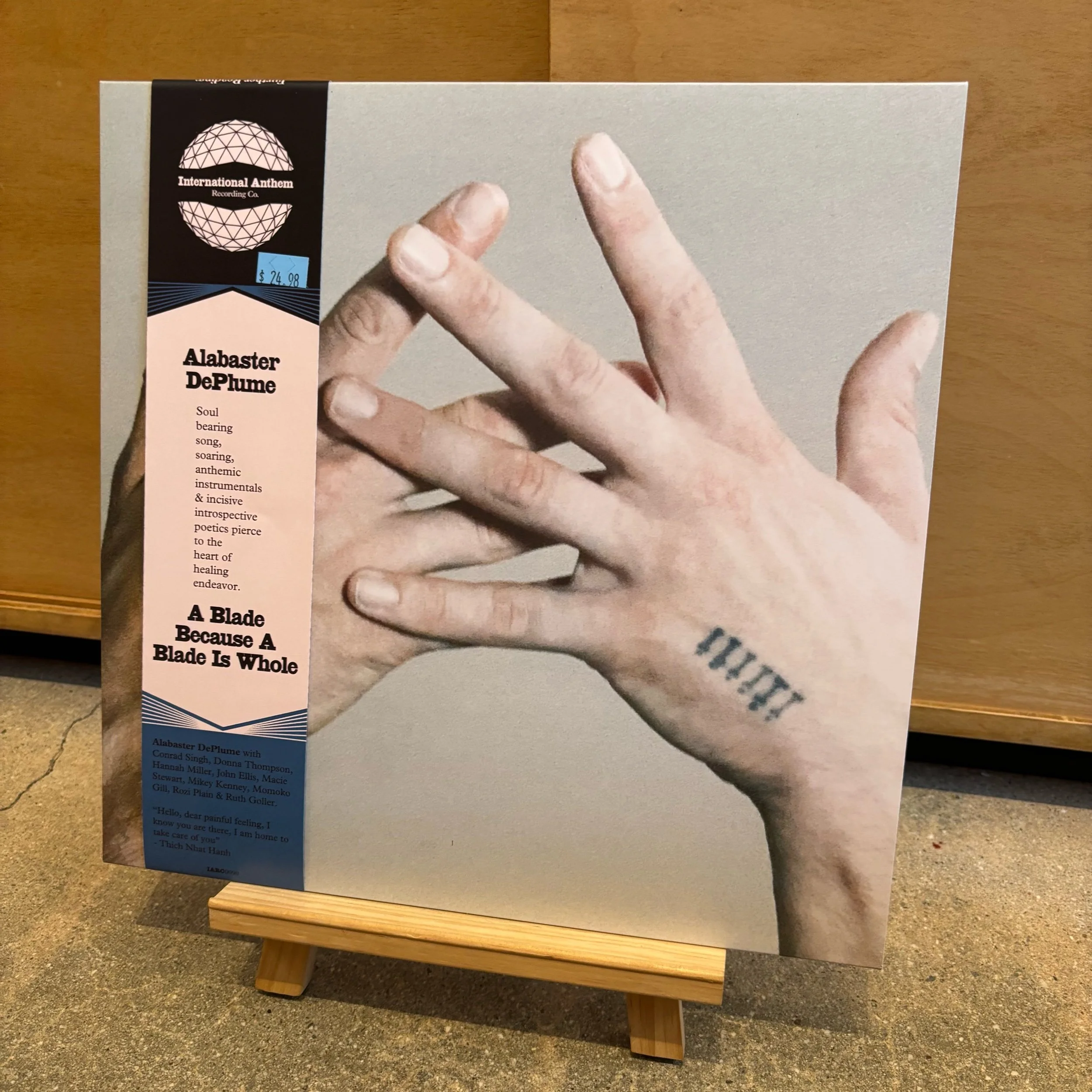
If there is a single word to describe what's on offer on Alabaster DePlume's (born Angus Fairbairn) A Blade Because a Blade Is Whole, it is "vulnerability." He offers poignant emotional honesty in idiosyncratic yet welcoming music that melds and explores connections between Anglo-English folk forms, spiritual jazz, mutant pop, neo-classical, and other styles. The subject was referenced on 2024's Cremisan: Prologue to a Blade EP and his sold-out poetry collection Looking for My Value: Prologue to a Blade. Here, vulnerability is aesthetic and m.o. in channeling the process of emotional and psychological healing by embracing pain as a necessary stage in its transformation. DePlume is accompanied by a stellar cast that includes Ruth Goller (bass, voice), Macie Stewart (violin, string charts), Donna Thompson (drums, voice, vocal charts), John Ellis (piano), Hannah Miller (cello), Conrad Singh (electric guitar), Momoko Gill (voice, drums), Rozi Plain (bass), and Mikey Kenney (violin, voices). DePlume speaks/sings and plays tenor and baritone saxophones, guitars, bass, and synths.
Opener "Oh My Actual Days" is an instrumental combining kick drums and vibrato-laden saxes, Stewart's buoyant string arrangements, and Kenney's haunted wordless vocals; strings entwine with them all in ragged elegance, embodying and underscoring the emotion. Eastern modalism winds around an impressionistic yet transcendent melody. DePlume enters singer/songwriter territory on "Thank You My Pain," inspired by the writings of Vietnamese monk and activist Thich Nhat Hanh. His hooky melody is folksy singsong, and carried by guitars, strings, blended saxes, bass, and drums. In one section, DePlume quotes Hanh directly. In "Form a V" we can hear trace elements of Tom Waits' blues-tinged jazz ballad form. It blends modal strings, saxophone, and subtle rim shots in a bass-driven rhythm with a nocturnal melody and spoken lyric. The track eventually soars like a lyrical '70s composition by Marion Brown before segueing into "Who Are You Telling, Gus," a mournful instrumental ballad led by deeply spiritual, bluesy tenor sax. "Kuzushi," a jiu-jitsu term reflecting the practitioner's balance, is performed solo on saxes and guitars. "Salty Road Dogs Victory Anthem" evokes the spookiness of the New Orleans Radiators at their darkest and the intimate South African jazz balladry of pianist Abdullah Ibrahim -- it's quite a feat. Likewise, "A Paper Man" walks the tightrope between John Lurie's moody, grooving solo material, dub reggae, and the sax-and-bass approach of Morphine before DePlume's raspy, gravely vocal writhes around in the sonic din. Closer "That Was My Garden" features the entire ensemble as folk meets spiritual jazz and grief-laden poetry. The protagonist faces a difficult truth: He squandered, due to time and fear, his many opportunities to care for his physical, emotional, and spiritual life. A Blade Because a Blade Is Whole stands in a direct line behind the rest of DePlume's catalog and brings his spiritual and creative worlds together. It's a brave record that confronts pain while embraces it with humility, acceptance, and yes, vulnerability.
A Blade Because a Blade Is Whole Review by Thom Jurek
International Anthem release
If there is a single word to describe what's on offer on Alabaster DePlume's (born Angus Fairbairn) A Blade Because a Blade Is Whole, it is "vulnerability." He offers poignant emotional honesty in idiosyncratic yet welcoming music that melds and explores connections between Anglo-English folk forms, spiritual jazz, mutant pop, neo-classical, and other styles. The subject was referenced on 2024's Cremisan: Prologue to a Blade EP and his sold-out poetry collection Looking for My Value: Prologue to a Blade. Here, vulnerability is aesthetic and m.o. in channeling the process of emotional and psychological healing by embracing pain as a necessary stage in its transformation. DePlume is accompanied by a stellar cast that includes Ruth Goller (bass, voice), Macie Stewart (violin, string charts), Donna Thompson (drums, voice, vocal charts), John Ellis (piano), Hannah Miller (cello), Conrad Singh (electric guitar), Momoko Gill (voice, drums), Rozi Plain (bass), and Mikey Kenney (violin, voices). DePlume speaks/sings and plays tenor and baritone saxophones, guitars, bass, and synths.
Opener "Oh My Actual Days" is an instrumental combining kick drums and vibrato-laden saxes, Stewart's buoyant string arrangements, and Kenney's haunted wordless vocals; strings entwine with them all in ragged elegance, embodying and underscoring the emotion. Eastern modalism winds around an impressionistic yet transcendent melody. DePlume enters singer/songwriter territory on "Thank You My Pain," inspired by the writings of Vietnamese monk and activist Thich Nhat Hanh. His hooky melody is folksy singsong, and carried by guitars, strings, blended saxes, bass, and drums. In one section, DePlume quotes Hanh directly. In "Form a V" we can hear trace elements of Tom Waits' blues-tinged jazz ballad form. It blends modal strings, saxophone, and subtle rim shots in a bass-driven rhythm with a nocturnal melody and spoken lyric. The track eventually soars like a lyrical '70s composition by Marion Brown before segueing into "Who Are You Telling, Gus," a mournful instrumental ballad led by deeply spiritual, bluesy tenor sax. "Kuzushi," a jiu-jitsu term reflecting the practitioner's balance, is performed solo on saxes and guitars. "Salty Road Dogs Victory Anthem" evokes the spookiness of the New Orleans Radiators at their darkest and the intimate South African jazz balladry of pianist Abdullah Ibrahim -- it's quite a feat. Likewise, "A Paper Man" walks the tightrope between John Lurie's moody, grooving solo material, dub reggae, and the sax-and-bass approach of Morphine before DePlume's raspy, gravely vocal writhes around in the sonic din. Closer "That Was My Garden" features the entire ensemble as folk meets spiritual jazz and grief-laden poetry. The protagonist faces a difficult truth: He squandered, due to time and fear, his many opportunities to care for his physical, emotional, and spiritual life. A Blade Because a Blade Is Whole stands in a direct line behind the rest of DePlume's catalog and brings his spiritual and creative worlds together. It's a brave record that confronts pain while embraces it with humility, acceptance, and yes, vulnerability.
A Blade Because a Blade Is Whole Review by Thom Jurek